What Is OGG? Guide to the Open-Source Audio Format
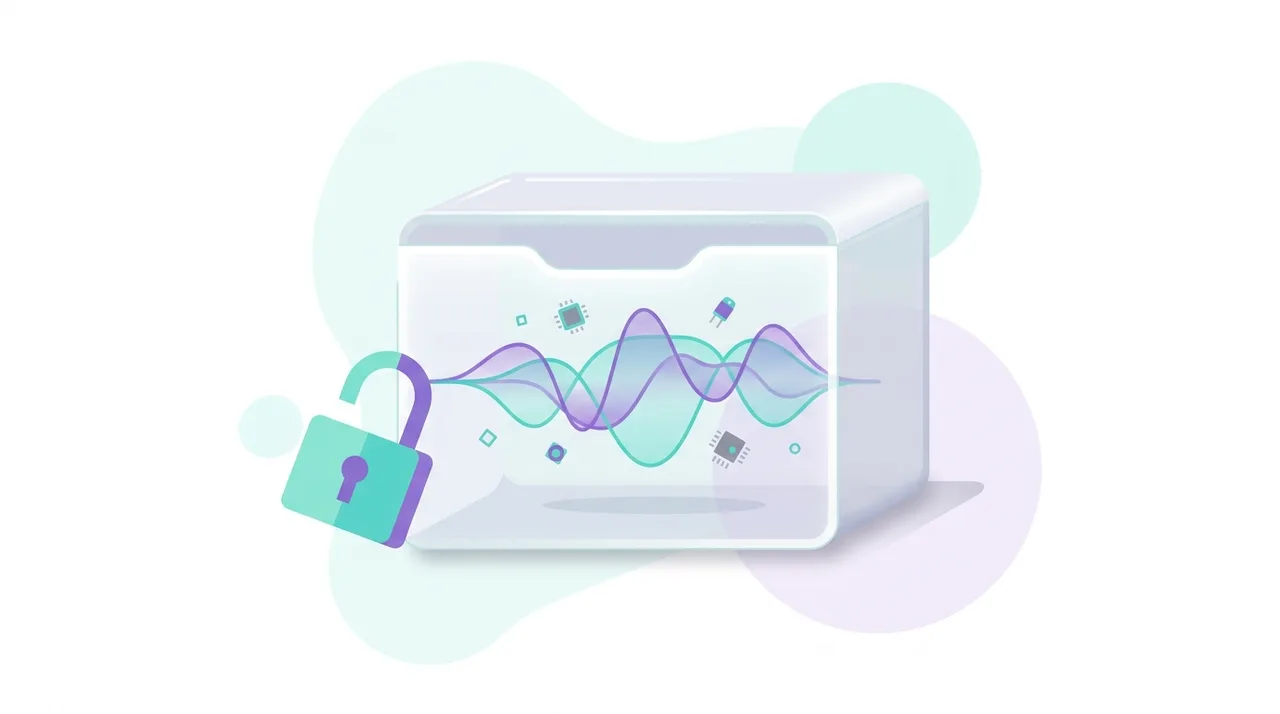
OGG is an open-source multimedia container format from the Xiph.Org Foundation, and "OGG files" almost always mean OGG Vorbis audio. Vorbis is a lossy codec engineered as a patent-free rival to MP3 and AAC, delivering equal or better quality at a given bitrate with no licensing fees. Because it is free to ship, OGG became the default audio format across game engines, Linux distributions, Wikipedia, and Spotify's early streaming infrastructure. It uses variable bitrate encoding and the flexible OGG container can also carry Opus, FLAC, or Theora video, making it a versatile open standard for the web and beyond.
This guide describes format capabilities and settings available in different programs. In WeLoveConvert you select the output format and, for supported images, quality. Codec, bitrate, lossless WebP mode and TIFF page selection are not available in the interface. Compare the result and keep your original.
summarizeKey Takeaways
- check_circleOGG is the container; Vorbis is the codec most OGG audio files use (the same .ogg box can also hold Opus, FLAC, or Theora video).
- check_circleVorbis is royalty-free, which is why Wikipedia, Spotify, and most game engines adopted it instead of paying MP3/AAC license fees.
- check_circleAt low bitrates (around 96-128 kbps) Vorbis audibly outperforms MP3; above 256 kbps both are effectively transparent.
- check_circleApple never added native OGG support, so iOS, Safari, and CarPlay users typically convert OGG to MP3 or M4A for playback.
How OGG Vorbis Compression Works
Vorbis uses a psychoacoustic model similar to MP3 but with several technical improvements. The encoder analyzes audio using Modified Discrete Cosine Transform (MDCT) with variable block sizes, adapting dynamically between 64 and 8192 samples based on the complexity of the audio signal. This allows Vorbis to use large blocks for smooth tonal passages (maximizing compression) and small blocks during transients like drum hits (preserving sharpness).
Unlike MP3, which is limited to a fixed set of bitrates, Vorbis uses variable bitrate (VBR) encoding by default. You set a target quality level from -1 to 10, and the encoder allocates bits where they are needed most. This results in consistently better perceived quality compared to constant bitrate encoding. At quality level 5 (roughly 160 kbps average), Vorbis is widely considered to match or exceed MP3 at 192 kbps.
Advantages and Limitations of OGG Vorbis
check_circleAdvantages
- addCompletely royalty-free, with no licensing fees for developers, publishers, or users.
- addBetter perceived quality than MP3 at low and mid bitrates thanks to native VBR encoding.
- addFlexible container that can also carry Opus, FLAC, and Theora video in one file.
- addFirst-class support across Chrome, Firefox, Edge, Android, and major game engines.
- addStreaming-ready with chained logical bitstreams and Icecast compatibility.
- addMature, stable spec frozen since 2004, so old files still decode reliably today.
cancelLimitations
- removeNo native playback on iOS, Safari, iTunes, or CarPlay.
- removeSparse hardware support — most car stereos and standalone players cannot read OGG.
- removeLargely superseded by Opus for new projects needing the best compression.
- removeSmaller selection of editing and tagging tools than MP3 or WAV.
When to Use OGG (and When Not To)
OGG Vorbis shines wherever licensing cost, low-bitrate quality, or open standards matter, but Apple and hardware gaps mean it is not a safe universal default. Use this checklist to decide.
- Choose OGG for game audio (Unity and Unreal both bundle Vorbis decoders) where zero royalties and small install sizes are critical.
- Use it for HTML5 web audio targeting Chrome, Firefox, and Edge, with an MP3 fallback for Safari and iOS.
- Prefer it for Linux desktops and open-source projects where avoiding proprietary codecs is a policy requirement.
- Pick it for internet radio and Icecast streaming that needs efficient compression without patent exposure.
- Avoid OGG when targeting iPhones, car stereos, or older hardware players — convert OGG to MP3 first for guaranteed playback.
- If you need bit-perfect archival quality instead of small lossy files, reach for FLAC rather than Vorbis.
OGG Vorbis vs Opus vs AAC
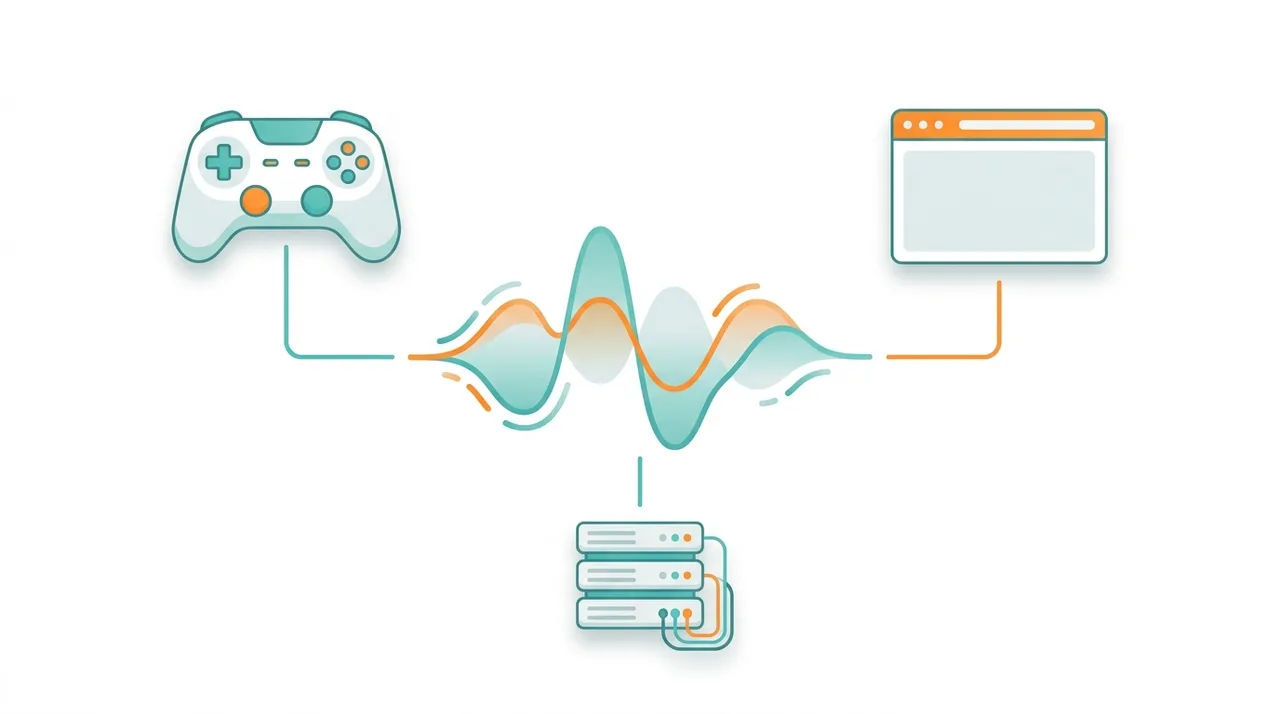
MP3 is the universal baseline, but the more interesting question is how Vorbis stacks up against its modern royalty-free successor Opus and against Apple's preferred lossy codec, AAC. All three are lossy, yet they target different eras and use cases.
| Feature | OGG Vorbis | Opus | AAC |
|---|---|---|---|
| Released | 2000 | 2012 | 1997 |
| Licensing | Royalty-free | Royalty-free | Patent-licensed |
| Quality at 96 kbps | Good | Excellent | Fair |
| Best for | Games, web music | Voice & low-latency | Apple devices |
| Apple native support | No | Partial (iOS 17+) | Full |
| Typical bitrate range | 45-500 kbps | 6-510 kbps | 8-320 kbps |
How to Convert OGG Files
- 1
Choose your target format
Select MP3 for maximum device compatibility, WAV for uncompressed editing, or M4A/AAC for Apple device support.
- 2
Upload your OGG file
Use WeLoveConvert to upload your OGG Vorbis file. The converter handles all OGG variants including different quality levels.
- 3
Set output quality
When converting to MP3, choose 192-320 kbps for music or 128 kbps for speech. Remember that converting between lossy formats always loses some quality.
- 4
Download and verify
Download the converted file and verify it plays correctly on your target device or platform.
Frequently Asked Questions
Is OGG the same as Vorbis?
No. OGG is the container format (like a box), while Vorbis is the audio codec (the content). An OGG file can contain other codecs like Opus or FLAC. However, "OGG" is commonly used as shorthand for OGG Vorbis audio files.
Why do games use OGG instead of MP3?
Games use OGG because it is completely royalty-free, offers better quality at lower bitrates (important for keeping game install sizes small), and has excellent decoder performance. Until MP3 patents expired in 2017, using MP3 in commercial games required paying licensing fees.
Can I play OGG files on iPhone?
iOS does not natively support OGG Vorbis playback. You need a third-party app like VLC, or you can convert OGG files to M4A or MP3 for native playback on Apple devices.
Is OGG better quality than MP3?
At the same bitrate, OGG Vorbis generally produces better quality than MP3, especially below 192 kbps. The difference is most noticeable at 128 kbps, where Vorbis sounds cleaner. At 256 kbps and above, both formats are effectively transparent.
What is the difference between OGG and Opus?
Opus is a newer codec that can also be stored in OGG containers. Opus offers even better compression than Vorbis, especially for speech, and is the standard codec for WebRTC voice calls. Vorbis remains common for music and games.
Does OGG support metadata tags?
Yes, OGG uses VorbisComment tags for metadata. These support artist, title, album, track number, and custom fields. The tagging system is simpler than MP3 ID3 tags but fully functional for organizing music libraries.
Can I stream OGG audio?
Yes, OGG was designed with streaming in mind. It supports Icecast streaming servers and can be streamed over HTTP. Many internet radio stations use OGG Vorbis for its combination of quality and zero licensing costs.
What replaced OGG Vorbis?
Opus, also developed by Xiph.Org, is considered the successor to Vorbis. Opus offers better quality at all bitrates, lower latency, and handles both speech and music excellently. However, Vorbis remains widely used in existing games and applications.
What does the OGG file extension stand for?
OGG is not an acronym. The name comes from "ogging," slang used by players of the game Netrek for a kamikaze tactic, which Xiph.Org developers adopted informally. The format itself is the container; the .ogg extension historically meant Vorbis audio, though .oga is now recommended for audio and .ogv for video.
Is OGG a lossy or lossless format?
The OGG container can hold both, but the codec determines this. OGG Vorbis and OGG Opus are lossy, meaning they discard inaudible data to shrink file size. If an OGG file contains FLAC, it is lossless. Most everyday .ogg files you encounter are lossy Vorbis audio.
Why is OGG so common in video games?
Game engines like Unity and Unreal ship with Vorbis decoders because the codec is royalty-free, decodes quickly with low memory overhead, and compresses well at the modest bitrates games use for music and ambient loops. Before MP3 patents expired in 2017, shipping MP3 in a commercial game meant paying per-title license fees, so OGG was the obvious choice.
OGG Vorbis remains a milestone of open-source audio: studio-grade quality with zero licensing strings attached, which is exactly why it took root in games, Linux, and the early streaming web. Its weak spots — no Apple support and thin hardware coverage — keep it from replacing MP3 everywhere, and for brand-new projects Opus usually wins on raw efficiency. But the millions of existing .ogg files are not going anywhere. When you need one to play on an iPhone or in the car, you can convert OGG to MP3 with WeLoveConvert in seconds, right in your browser.